
We are committed to sharing news, stories, events and opinions that ensures our province stays free, united and independent from the overreach of the Federal government.
All are welcome and respectful debate is encouraged. Please join with the intention of participating. Proceeds are donated.

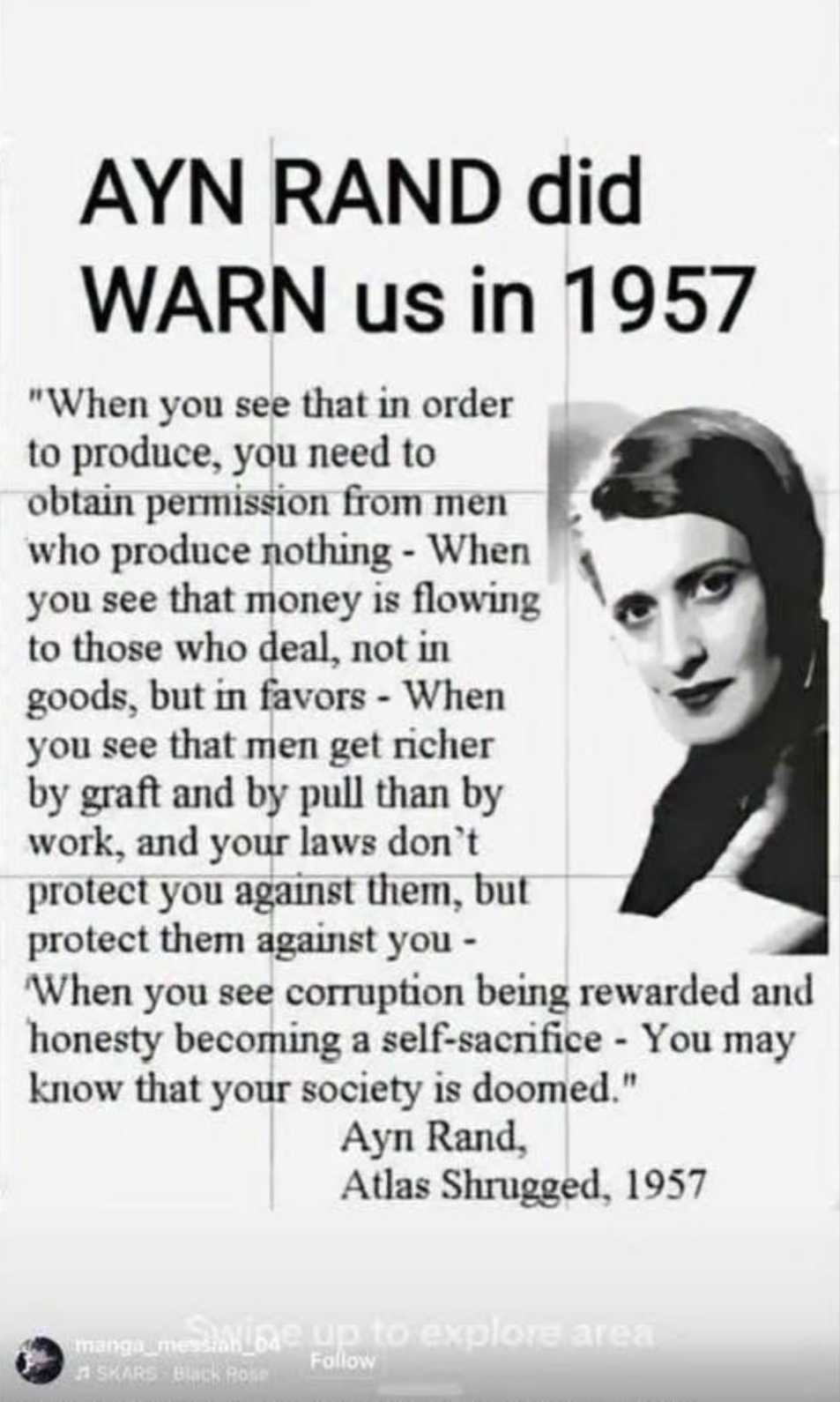
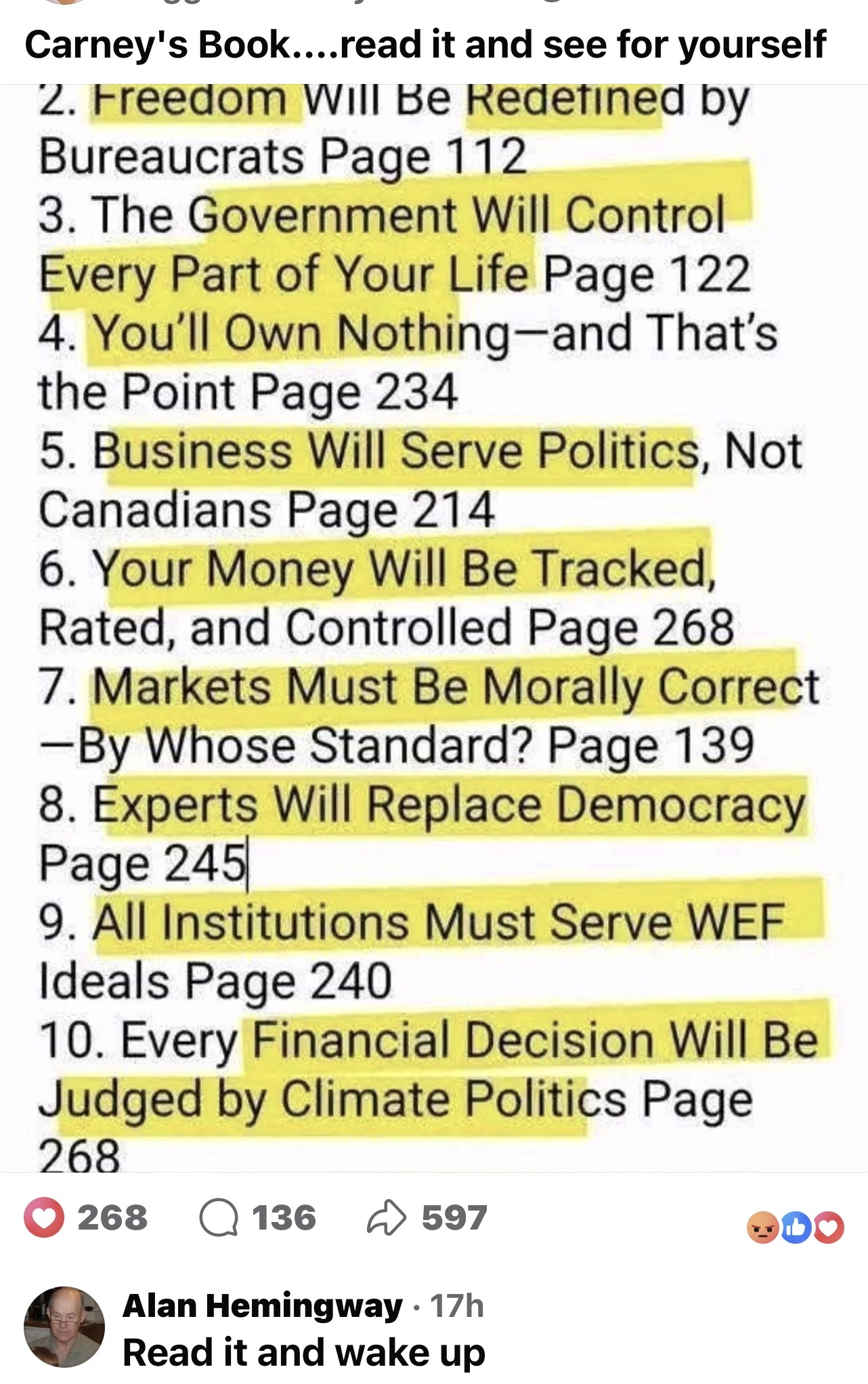
This is exactly what is being attempted in N. America right now, not just the USA but more noticeable in Canada if you are paying attention ……explanation spot on!
For the last year and a half, Americans have been slammed with politics to the point that it has made vast numbers of people nearly crazy. Following the news, the blow-by-blow is not easy, and it is worse seeing coalitions form, collapse, reconstitute, form again, and be witness nonstop to what seem to be subversions, betrayals, duplicates, and disappointments.
We follow the polls, donate to candidates, listen to podcasts, cheer our friends and boo the bad guys, all in this exciting spectator sport. I’m told it’s not really this way in Europe. Americans have a distinct sense of investment in the way our public life operates and we believe we can and should do something about it.
Do we really have a clear conception of the larger forces at work? I sense that what is lacking is a clear-headed theory about what is actually going on, that is the thematics of the larger struggle going on here.
Oh sure, there are plenty of people who will tell you that this is about stopping the attempt of Donald Trump to be like a king. My neighborhood was filled with “No Kings” yard signs, until the same households quietly took them down as they cheered the visit of King Charles of Britain.
Others say this is really a struggle between the two political parties, an argument about U.S. foreign policy interests, wrangling over personnel, and so on. I’m not going to discount other theories entirely but what they all lack is a bigger philosophical way to understand our times.
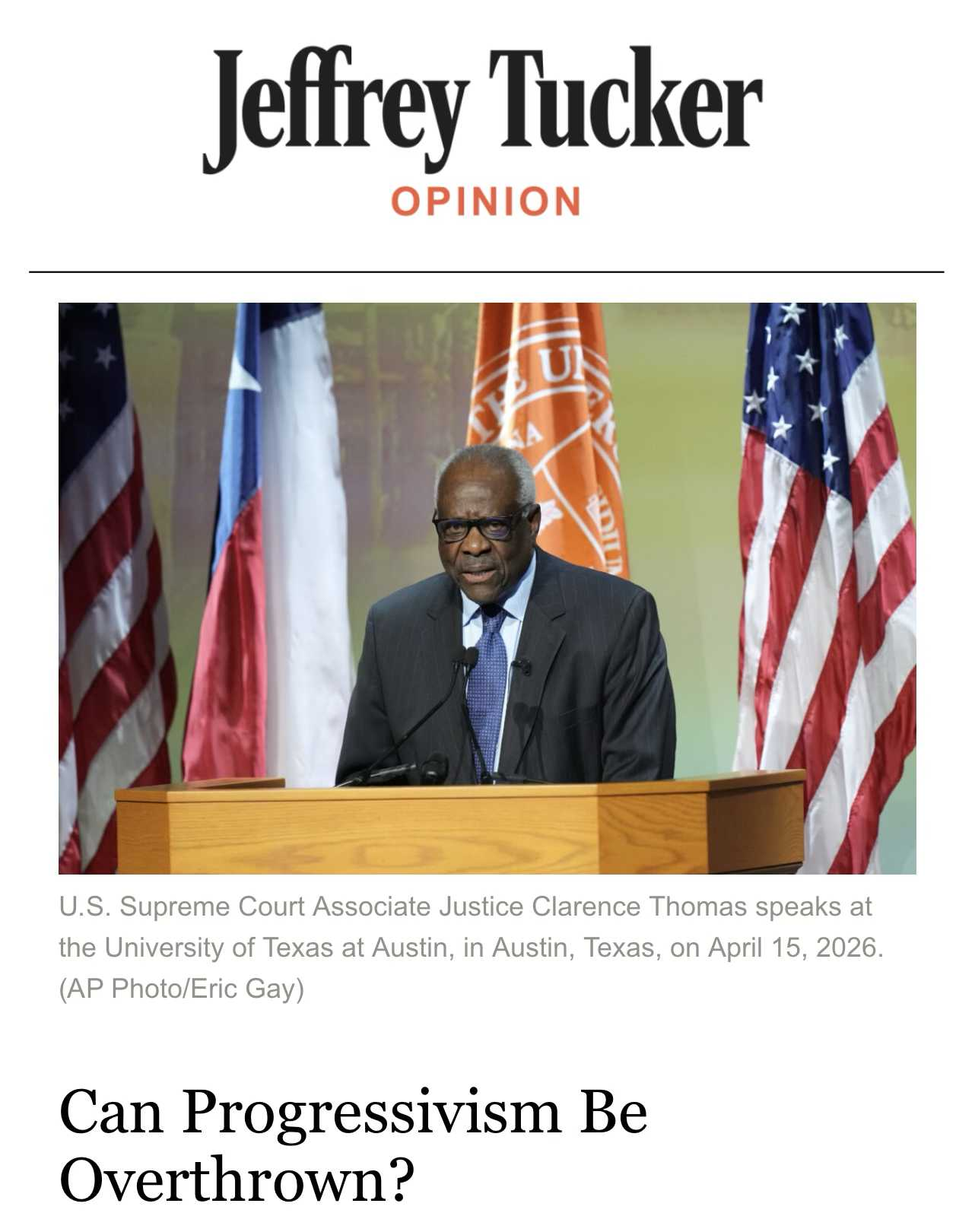
A Supreme Court Justice recently gave a spectacular speech, one of the most important—probably THE most important—in a century or more. I’ve rarely read anything so clear, concise, accurate, and incredibly truth-telling.
Those who understand the speech and its message are going to be better positioned to understand what is really going on in our times. Those who ignore this speech will continue to be mystified by the day-to-day headlines and roiling political news.
The author and speaker is Justice Clarence Thomas, one of the most impactful voices of our times. It was delivered at the University of Texas, Austin, on April 15, 2026.
You can find the speech online with an easy search or read it posted at the Civitas Institute.
The core underlying message: Progressivism is falling apart or already is gone because it is contrary to the American idea. The remaining argument today that matters is what will replace it.
To understand the implications, we need to understand what Progressivism is, the role it played in remaking this country, its theory of power and expertise, why it was never consistent with American ideals, and why it is destined for the dust bin of history.
He begins with the historical context and the centrality of the Declaration of Independence. It “did not establish a form of government—that was the job of the Constitution that followed—but it stated the purpose of government. The Declaration made clear in unmistakable prose that the purpose of government is to protect our God-given inalienable rights, rights that all individuals equally possess.”
“The ideas of the Declaration,” he says, “were so powerful that our nation could not coexist with the contradiction created by the great evil of slavery. Those principles were so powerful that hundreds of thousands of Americans fought and died in the Civil War to make men free. Those ideas have been so powerful that they convinced our nation to finally end segregation. They continue to be so powerful today that they have inspired people throughout the world to throw off the shackles of their oppressors.”
As he says, the Founders were willing to commit everything with great courage to the cause of individual rights to life, liberty, and the pursuit of happiness. It was not mere philosophy but life purpose, something for which they were willing to fight with courage and enormous risk and sacrifice. That decision shaped the American experience.
It is about a third of the way through where the speech gets hot and revealing of a history that very few students or adults today understand. He explained how the advent of Progressivism in the early teens of the 20th century effectively attacked and overthrew the vision of the Founders and the Declaration.
“At the beginning of the 20th century, a new set of first principles of government was introduced into the American mainstream,” he says. “The proponents of this new set of first principles, most prominently among them the 28th President, Woodrow Wilson, called it Progressivism. Since Wilson’s presidency, Progressivism has made many inroads in our system of government and our way of life. It has coexisted uneasily with the principles of the Declaration. Because it is opposed to those principles, it is not possible for the two to coexist forever.”
“Progressivism was not native to America,” he continues in ways that are consistent with everything I’ve read about this period. Indeed, some of the most influential intellectuals that emerged on the U.S. scene in that time had in fact done their graduate work in Germany, schooled in the dreams of technocracy and centralized social and economic management.
“Wilson and the progressives candidly admitted that they took it from Otto von Bismarck’s Germany, whose state-centric society they admired. Progressives like Wilson argued that America needed to leave behind the principles of the Founding and catch up with the more advanced and sophisticated people of Europe. Wilson called Germany’s system of relatively unimpeded state power ‘nearly perfected.’”
To Wilson, the inalienable rights of the individual were “a lot of nonsense.” Wilson redefined “liberty” not as a natural right antecedent to the government. Instead he saw liberty as “the right of those who are governed to adjust government to their own needs and interests.” The government, as Wilson said, would be “beneficent and indispensable.”
Progressivism, says Thomas, “requires of the people a subservience and weakness incompatible with a Constitution premised on the transcendent origin of our rights.”
It was this period in history when the original design of the Constitution was mangled with a 16th Amendment that authorized the income tax and the 17th Amendment that turned the bicameral Congress into a unitary majoritarian body (thus empowering large cities over states). The central bank came along at the same time. The federal agencies grew and grew, with ever more power and invasions of rights.
Central to the Progressive vision was the exaltation of science (as understood by credentialed experts) at the expense of liberty. They believed that Darwin had demonstrated the dangers of unchecked procreation and sought to replace freedom with race theory, segregation, and eugenics. This wicked vision of the purpose of government mutated further in Europe with the rise of Nazism, fascism, communism, and the administrative state that effectively deleted people’s government.
Justice Thomas explains all of this in bracingly brief form. It is an extremely satisfying read because he compresses hundreds of books into a short address. I frankly doubt that any Supreme Court Justice has dropped so many truth bombs in such a short space in the history of our country.
The central point: the entire vision failed. It did not give us a better managed society but social and economic stagnation, an overweening government ruled by supposed experts, invasions of our communities and families, and a crushing of individual liberty.
Make no mistake: all of this flowed from a philosophy of government that had nothing to do with the Founders’ vision.
The system that displaced the Founders’ structure is under pressure as never before today. Indeed, Progressivism is unraveling in our times because it has failed to live up to its promise, it breeds corporate corruption, it impoverishes people, and it is contrary to all our moral intuitions as a people.
“As we are gathered to celebrate this 250th anniversary of the Declaration,” he concludes, “it may be tempting to do so as if we are passive spectators. It may be tempting to ... treat the Declaration like a shiny object or a keepsake, and listen to the sound of our own voices. ... What we must turn our attention to today is finding in ourselves the same level of courage that the signers of the Declaration had, so that we can do for our future what they did for theirs.”
His final message to students: “Each of you will have opportunities to be courageous every day, whether your calling in life is as a day laborer, a stay-at-home mom, a small business owner, an educator, an office worker, a judge, or a Senator. It may mean speaking up in class tomorrow when everyone around you expects you to live by lies. ... It may mean turning down a job offer that requires you to make moral compromises. One thing I know to be true: It will mean waking up every day with the resolve to withstand unfair criticism and attacks. These are the choices that will confront you, and you must decide whether to respond with timidity or with courage, as the signers of the Declaration did.”
Hear, hear! This is a mighty and glorious speech in all its essentials, worthy of deep study and wide readership. Once you internalize the meaning of it all, and consider how the Founders confronted a system they too had to overthrow in order to realize the blessings of liberty, our task becomes very clear.

Use these discount codes to get 1/2 price subscription.
Monthly FREEALBERTA -$1
Annual GWDISCOUNT- $12
Renewing subscription to pay direct and take advantage of the discount. Go to "contact us" the option to pay by credit card shows up and you can renew using the codes.
Dorota Rozanska
I remember Poland under communism. I had lived through this. 1970's we had Edward Gierek, figure that reminds me Carney's views and actions. Gierek's famous words that many Poles can remember were "will you help me"? Our response was "yes, we will". We had great hopes. But Gierek and his political colleagues were living high life like kings. For us we had food stamps, sugar stamps cigarette, alcohol, gas stamps. Stamps were for pretty much everything but the store shelves were empty anyways. As l remember there was like 4 kg of meat per family per month. I may be wrong but l am positive it was not much. People didn't have cars, only some. Anyways, what l wanted to say, l run away from it and ligally entered Canada all these years ago....
I think you need to live through comunism to see the pattern of where we are heading with our current liberal government.
I am not a politician, just expressing my observations.