

We are committed to sharing news, stories, events and opinions that ensures our province stays free, united and independent from the overreach of the Federal government.
All are welcome and respectful debate is encouraged. Please join with the intention of participating. Proceeds are donated.

What we need ….credibility….
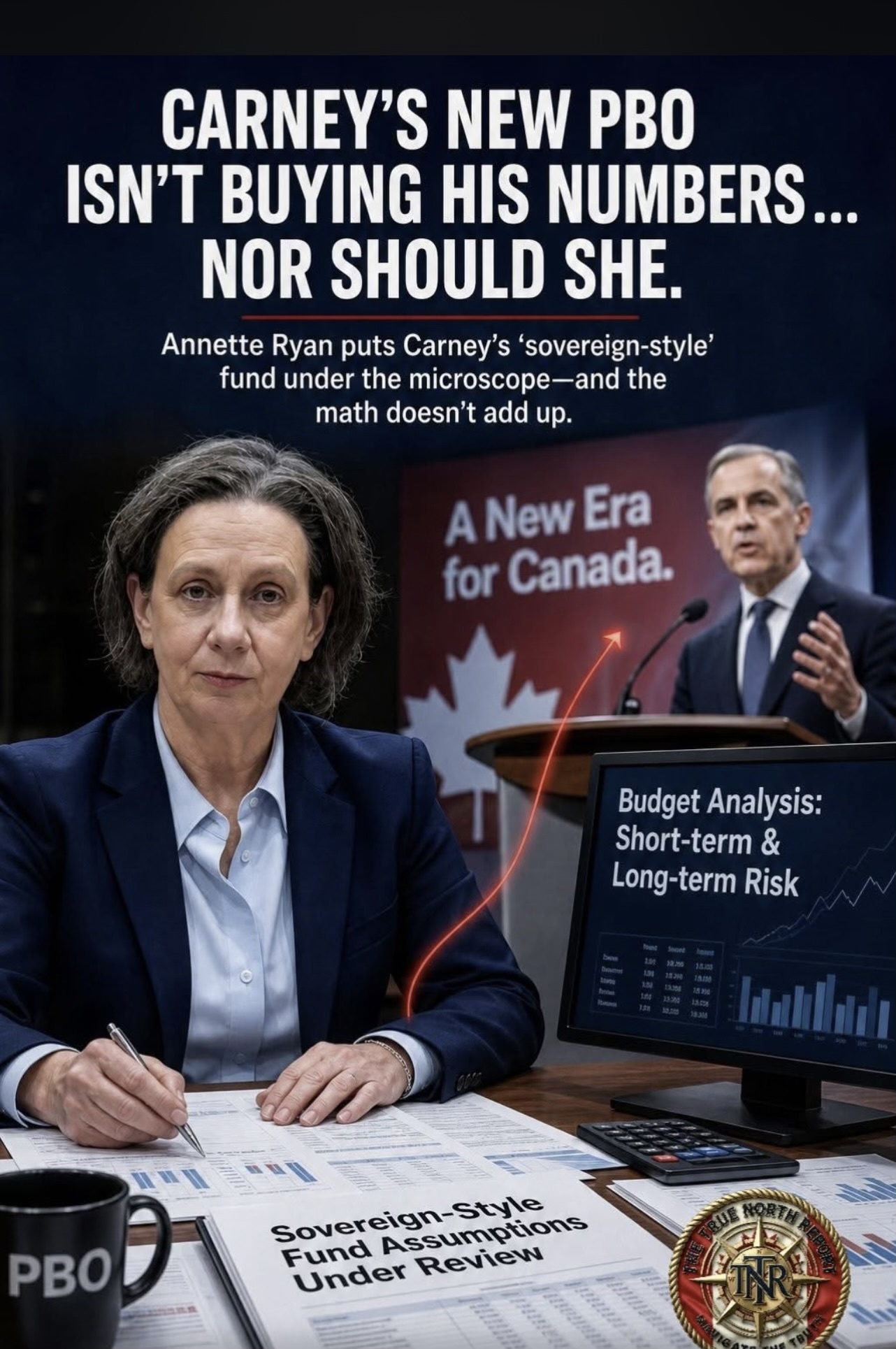
Carney’s "Long-Time Friend" Budget Watchdog Isn’t Backing His Numbers ... Nor Should She
When the federal government unveiled its new “sovereign‑style” investment fund—one that promises both to boost Canadian infrastructure and let ordinary Canadians “share in the upside”—the spin was polished and upbeat. Mark Carney’s team framed it as a way to fill a critical financing gap, crowd‑in private capital, and give households a shot at better returns than the stock market. But one of the people who should be most sympathetic to that pitch isn’t buying it.
Annette Ryan, Canada’s new Parliamentary Budget Officer, has spent her career steeped in the machinery of federal finance—and she’s not shy about saying when the numbers don’t add up.
Who Is Annette Ryan?
Annette Ryan isn’t a political appointee in the usual sense. She’s a career public‑finance professional whose résumé reads like a primer on how Ottawa actually manages money. She spent years at Finance Canada, where she worked on fiscal policy, budget planning, and the kind of behind‑the‑scenes analysis that shapes big‑ticket spending decisions.
Later, Ryan moved into the private sector and financial‑intelligence arena, serving as Deputy Director at FINTRAC, Canada’s financial‑intelligence unit. There she dealt with complex flows of money, risk‑based analysis, and how to track capital across borders and institutions. Those roles gave her a rare double lens: she understands how the federal government thinks about money, and she also understands how the financial‑sector players—banks, private equity, and institutional investors—structure deals and allocate risk.
When Parliament needed a new PBO in 2026, that blend of experience made her a natural fit. MPs ultimately approved her appointment on April 20, and she formally took office as Canada’s budget watchdog on April 22, 2026.
The PBO Role—And Why It Matters
The Parliamentary Budget Officer’s job sounds technical, but it’s politically huge. The PBO is an independent, non‑partisan office that provides Parliament with economic and fiscal analysis—costing out programs, assessing forecasts, and flagging risks that the government either downplays or leaves undefined.
Unlike a Finance Department projection, PBO work is designed to be skeptical by default. It asks: What assumptions are baked into these numbers? What happens if growth is slower, interest rates higher, or revenues lower? Is this program really filling a gap, or just duplicating what already exists? When the PBO speaks in committee, it carries weight because it’s not part of the political machine. It’s the office that says, “Here’s where the math doesn’t hold.”
How Ryan Landed the Job
Ryan’s appointment came out of a process that’s supposed to be insulated from partisan influence, even though politics always leaks in. A committee of MPs, including members from the Liberals, Conservatives, and other parties, interviewed candidates and voted on who would become the next PBO.
Her supporters pointed to her decades of experience in fiscal policy, statistics, and macroeconomic analysis as exactly what the role requires. Her background in both finance and financial‑intelligence work suggested she could handle anything from a simple tax change to a complex, multi‑billion‑dollar infrastructure fund.
But there’s also a less advertised angle: Ryan and Mark Carney have long intersected in the world of Canadian and international finance. Both are products of serious, high‑level public‑finance circles, and both have worked on issues of growth, capital allocation, and economic resilience.
In theory, that shared background could make Ryan someone who “gets” Carney’s worldview. In practice, however, it’s given her another lens: she knows how easy it is for smart people to dress up shaky assumptions in fancy language.
The Sovereign‑Style Fund—and Ryan’s Pushback
Carney’s new sovereign‑style fund is being sold as a two‑for‑one:
- First, it will help finance big‑ticket infrastructure projects that struggle to attract private capital today.
- Second, it will give Canadians a way to “participate” in those investments, either directly or through a government‑linked product.
The government’s pitch is that this isn’t just another taxpayer loss; it’s a way to build productive assets, share returns, and narrow the gap between where capital is and where it’s needed. The problem, from the PBO’s perspective, is that the numbers and the design don’t yet match the confidence.
In recent testimony before a Senate committee, Ryan made it clear that she’s not convinced by the current narrative. She didn’t scream or grandstand. She asked pointed, technical questions that cut straight to the core of the plan’s credibility.
“Where’s the Gap?”
One of the first questions Ryan raised was deceptively simple: Which specific gap in Canada’s financing landscape is this fund actually meant to fill?
Canada already has several institutions that allocate capital in the public‑interest space:
- The Business Development Bank of Canada (BDC), which supports small and medium‑sized businesses.
- The Canada Infrastructure Bank (CIB), which finances large‑scale transit, energy, and transportation projects.
- Public‑sector pension funds that increasingly invest in infrastructure.
Ryan’s line of questioning assumed that if the government is creating yet another government‑backed vehicle, it should be able to show that existing institutions are not only full, but structurally incapable of stepping into the space this new fund is meant to occupy.
So far, according to Ryan, the government hasn’t done that.
“Why the Participatory Angle?”
Perhaps the sharpest pushback came on the “participatory” angle: the idea that ordinary Canadians will be able to invest in the fund alongside big institutions. The National Post and other outlets have framed this as an attempt to sell the fund as pro‑middle‑class, even populist, while quietly layering risk onto the public.
Ryan was blunt in her skepticism. She asked, quite plainly, what problem such a “participatory” structure is trying to solve. If the goal is to give Canadians better returns, existing vehicles like the CPP, RRSPs, and private funds already compete in that space. If the goal is to tighten the link between taxpayers and public‑sector investments, traditional bonds or other instruments can do that without the overhead of a new fund.
In committee, she told senators that she didn’t see “what is to be gained” by the participatory aspect of the Canadian‑style wealth fund. That’s a damning line from a fiscal watchdog: it’s not accusing the government of fraud, but it’s saying the stated rationale doesn’t stand up to basic economic scrutiny.
Crowding Out and the “Brookfield Effect”
Another key question Ryan raised was whether the government’s new fund will crowd out private‑sector financing. This is the core of the “Brookfield‑gets‑the‑upside” critique you’re already highlighting.
When the government borrows money or issues debt to back a fund that invests in infrastructure, it can create a situation where private investors are squeezed or simply choose not to participate. The logic is straightforward:
- If the government can access cheaper capital or offer guarantees, it can under‑bid private players on risk and return.
- Private investors may then step back, leaving the taxpayer‑backed vehicle to take on more exposure.
- At the same time, any fees or upside for management (like large private‑equity or infrastructure firms) can still be substantial, while the risk is pushed onto the public.
Ryan highlighted exactly this dynamic in her testimony. She warned that if the fund is funded through government debt, it will need to earn returns that meaningfully exceed the cost of that debt—or it will effectively be a redistribution mechanism disguised as an investment.
She also pointed out that any new fund comes with its own overhead: staffing, legal structures, management fees, and administrative costs. If the long‑term return barely beats the cost of debt, much less those overheads, then the project is, in effect, a loss‑making operation dressed up as a “sovereign wealth fund.”
Debt‑Financing Red Flags
Ryan’s concerns about using debt to finance the fund are some of the most concrete criticisms. Governments have long borrowed to build infrastructure, but they usually do so through transparent channels—budgets, capital plans, and explicit borrowing limits.
A third‑party‑style investment vehicle financed with debt is different. It can create a layer of separation between the day‑to‑day Treasury Board‑style oversight and the investment decisions themselves. Ryan’s worry is that this separation could blur accountability:
- The government can say, “It’s the fund’s decision,” even though the fund would be backed by taxpayer‑backed debt.
- If returns fall short or projects underperform, the original justification—that this was a “smart investment”—can be quietly downgraded to “an unfortunate loss.”
She told the committee that the government needs to spell out, in detail, how it plans to ensure that the fund’s structure doesn’t leave the public on the wrong side of the risk‑return equation. That includes:
- Clear return thresholds and risk‑sharing rules.
- Limits on how much debt can be issued.
- A mechanism for winding down or re‑evaluating the fund if it consistently underperforms.
So far, those details are largely absent.
“The Numbers Aren’t Just Right”
What Ryan is doing, in effect, is what good PBOs have always done: testing the government’s narrative against the numbers. When the government says, “This fund will reduce the private‑investment deficit,” she asks, “By how much, under what assumptions?”
When the government says, “This will give Canadians a chance to participate,” she asks, “Whose interests are actually being served, and how much will it cost?” When the government says, “We’re using this to fill a financing gap,” she asks, “What exactly is that gap, and why can’t existing institutions address it?”
Those aren’t rhetorical questions. They’re the kind of questions that force a government to either tighten its assumptions, narrow its promises, or admit that the plan is more about politics than economics. In committee, Ryan has indicated that the current package doesn’t hold up to that level of scrutiny.
A Tense Dynamic, Not a Surprise
There’s a media storyline floating around that suggests Carney “picked a friend” as PBO and that she’s now “biting the hand that feeds her.” That framing is too cute. Ryan is not a political insider; she’s a policy professional stepping into a role that, by design, is supposed to challenge the government of the day.
Whether the prime minister is Mark Carney, Stephen Harper, or Justin Trudeau, the PBO’s job is to be the office that points out when numbers are too optimistic, risks are too lightly sketched, and plans are too vague. Ryan’s pushback on the sovereign‑style fund fits that pattern.
What makes this moment interesting is that Ryan’s background overlaps with Carney’s, and she’s not using that overlap to be soft. She’s using it to engage with the government’s arguments on a highly technical level—and still finding them wanting.
What This Means for the Fund
In practical terms, Ryan’s testimony and the PBO’s emerging analysis are likely to force the government to either:
1. Clarify and tighten the plan: Define the financing gap, spell out risk‑sharing, and set concrete return thresholds and debt‑limits.
2. Downscale the fund: Narrow its mandate or scale back expectations about how much it will really change the investment landscape.
3. Lean into the politics over the economics: Plow ahead with the current design, and accept that the PBO will keep calling it out as a project that may not live up to its promises.
For the opposition, Ryan’s skepticism is a gift. It gives them a non‑partisan, numbers‑based justification for attacking the fund as a risky, poorly‑defined boondoggle. For the government, it’s a reminder that even a prime minister with a glittering economic résumé can’t just wave away basic questions about cost, risk, and value for money.
The Bigger Story
Behind the headlines about “Carney’s flimsy economic claims” and “Brookfield getting the upside” is a quieter story: Canada’s new budget watchdog is doing what watchdogs are supposed to do. She’s not just nodding along; she’s asking whether the numbers behind one of the government’s flagship projects actually hold together.
Annette Ryan’s background in finance, public‑sector economics, and financial‑intelligence gives her the tools to see through the spin. And now, as Parliamentary Budget Officer, she has the authority to say, in plain language, that the latest big‑ticket plan doesn’t yet add up.
If Carney’s government wants to sell this fund as a smart, disciplined use of capital, it will have to answer the questions Ryan is putting on the table. Until then, the numbers won’t just speak for themselves—they’re being held up against the bright light of scrutiny.
Is Carney’s “sovereign-style” fund a smart long-term bet — or just political branding dressed up as fiscal policy?
#CanadaPolitics #FederalPolitics #BudgetWatch #PBO #AnnetteRyan #MarkCarney #FiscalPolicy #BudgetAnalysis #OttawaPolitics #PublicFinance #CanadianNews #PolicyWatch #Accountability #Transparency #NewsAnalysis

Use these discount codes to get 1/2 price subscription.
Monthly FREEALBERTA -$1
Annual GWDISCOUNT- $12
Renewing subscription to pay direct and take advantage of the discount. Go to "contact us" the option to pay by credit card shows up and you can renew using the codes.

What do you think about Rath trying to seemingly change the UCP to a separatist party? Do we really know how Danielle would vote? Shouldn’t we a chance? She has done so much for democracy so far. If the referendum vote goes our way do we not believe she would do everything to get a good deal once she has that mandate? IMHO rear is going off half-cocked or he maybe knows something he’s not telling us but I think if he knew something he’d tell us because he can’t keep his flapping jaw shut! IMHO🤷🏻♀️