

We are committed to sharing news, stories, events and opinions that ensures our province stays free, united and independent from the overreach of the Federal government.
All are welcome and respectful debate is encouraged. Please join with the intention of participating. Proceeds are donated.

"Ted Morton: Carney demands Supreme Court strip provinces of right to pass their own laws"
Article copied
"There is an important constitutional conference going on in Ottawa this week. Haven’t heard about it? Don’t feel badly. Neither have most provincial governments who stand to lose one of the most important powers they acquired with the adoption of the Charter of Rights and Freedoms in 1982.
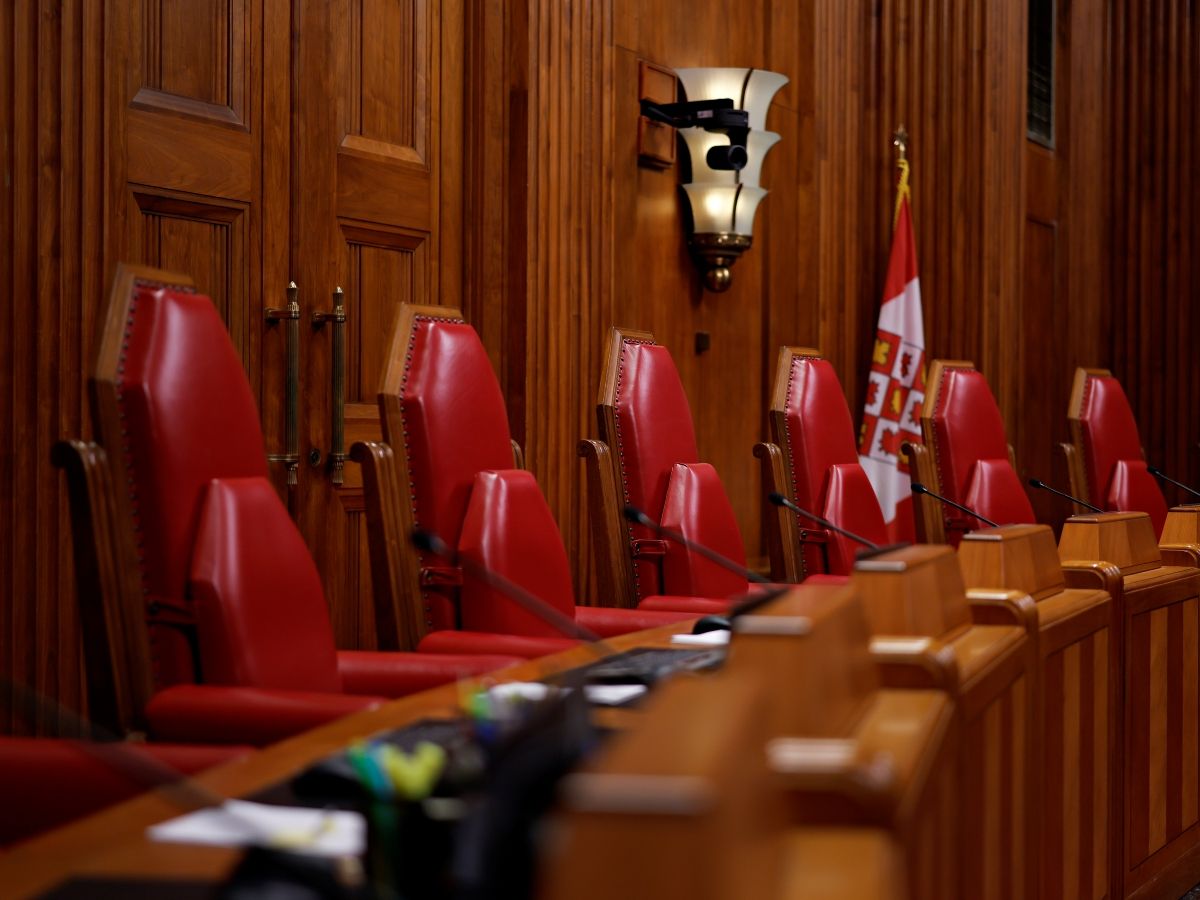
The provincial premiers have not been invited. There is none of the pomp and circumstance and media coverage that normally accompany constitutional conventions. No, this will all take place very quietly in the chambers of the Supreme Court, where the Mark Carney Liberals are asking the Supreme Court to effectively amend the Charter by imposing new restrictions on how provincial governments can use their Section 33 notwithstanding power.
The occasion is an appeal from Quebec dealing with Bill 21, which prevents some civil servants, most notably teachers, from wearing religious symbols at work. Bill 21 also includes the use of Section 33 of the Charter, which states that a law “shall operate notwithstanding a provision included in section 2 or sections 7 to 15 of this Charter.”
This notwithstanding power allows a legislature to exempt one of its laws from any judicial declaration of invalidity arising under the designated sections of the Charter. Its practical effect is to give elected governments rather than judges the last word when there is a disagreement over the practical meaning of a right. And that’s where the political fight begins.
In 1981, Trudeau’s original draft of the Charter had no notwithstanding clause. Section 33 was added only after eight provincial premiers — the “Gang of Eight” — made it clear that they would not accept Trudeau’s proposed Charter without it. Hard late-night bargaining resulted in a compromise. Trudeau got his Charter. The provinces got the notwithstanding clause.
The premiers knew from experience that the text of the Constitution does not speak for itself. At the end of the day, the Constitution means what judges say it means. In the worst-case scenario, Quebec and the Western premiers feared that Ottawa could use the Charter as a form of “disallowance in disguise,” a federal policy veto of provincial policies exercised by federal judges rather than by federal politicians.
Outside of Quebec, the not withstanding clause was little used over the past three decades. Recently, however, there has been a resurgence in the provincial use of the notwithstanding clause. Section 33 has been used in ten different provincial laws since 2018 — not just by Quebec but also by Ontario, Saskatchewan and Alberta.
Sensing the risk of losing the strategic value that the Supreme Court’s Charter decisions give to the federal government — i.e., disallowance in disguise — the Carney Liberals have now asked the Supreme Court to impose new restrictions on when and how a government (read: provincial government) can use the clause. Carney’s government is asking the Court to rule that the pre-emptive use of the notwithstanding clause is unconstitutional. Ottawa’s legal argument contradicts both the text of Section 33 and its clearly documented purpose.
That purpose was succinctly explained by former Alberta premier Peter Lougheed in 1983: “We needed to have the supremacy of the legislature over the courts. … we did not (want) to be in a position where public policy was being dictated or determined by non-elected people.” Lougheed argued in a 1991 speech that the notwithstanding power provided Canada with a “system of checks and balances between the judiciary and legislators before judicial supremacy could assert itself.” He used the examples of both Great Britain and Australia to demonstrate that it is possible to have constitutional supremacy without judicial supremacy, the rule of law without the rule of lawyers.
That was the deal back in 1982. But now Carney wants to break it.
Starting Tuesday, after opening statements on Monday, the Supreme Court is scheduled to hear three days of legal arguments on Bill 21. Ontario, Alberta, British Columbia and Saskatchewan have intervened to support Quebec’s position: that its use of the notwithstanding clause prevents courts from even hearing a Charter challenge against Bill 21. Forty rights advocacy groups — a who’s who of the Court Party, almost all of whom receive funding from Ottawa — have intervened to support the federal government’s position: that the notwithstanding clause cannot be used pre-emptively to prevent courts from ruling on the constitutional validity of Bill 21.
Cheered on by their Court Party supporters, will the nine Supremes — six of whom were appointed by Justin Trudeau — rule in favour of the Carney Liberals? If they do, they will have effectively amended Section 33 to mean something very different than what Quebec, all the Western premiers and even the Trudeau government understood it to mean in 1982. For the Supreme Court to impose any new restrictions on the use of the clause would be precisely the abuse of judicial review that Section 33 was designed to prevent.
Legal commentators are already predicting that an adverse ruling against Quebec and its provincial allies could “inflame separatism” and lead to a “national unity” crisis. I agree. The logic of Section 38(3) of the Constitution, which permits opting out of certain amendments, should apply to Section 33 as well as to the provinces’ traditional constitutional powers. Section 38(3) gives every province the legal right to opt out of an otherwise valid constitutional amendment if the amendment removes one of a province’s enumerated powers.
Still suffering from the devastating economic effects of Pierre Trudeau’s National Energy Policy, Lougheed and the other western premiers fought successfully to force Trudeau to add Section 92(A) to the new Constitution. Section 92(A) confirmed each province’s exclusive jurisdiction over the development and management of their natural resources. With first-hand experience of their political vulnerability to central Canadian majorities, the western premiers saw Section 38(3) as an insurance policy against any future attempt by Ottawa to repeal their newly acquired (92A) powers.
Like Section 92(A), Section 33 is a constitutional power of each province. Why should Ottawa be allowed to do indirectly though the Supreme Court what the Constitution prohibits it from doing directly by a formal constitutional amendment?"
Article content
National Post

Use these discount codes to get 1/2 price subscription.
Monthly FREEALBERTA -$1
Annual GWDISCOUNT- $12
Renewing subscription to pay direct and take advantage of the discount. Go to "contact us" the option to pay by credit card shows up and you can renew using the codes.
By Ellie Grey
Six years ago, the entire nation, near the entire world - was put under lockdown. Not for an influenza-like illness, but for something far more dangerous.
We lived through a pandemic, yes - but not of a virus. This was a pandemic of media manipulation, government propaganda, corporate corruption and psychological warfare on humanity. And now, six years on, we have to ask…what have we actually learned?
We’ve learned that they hold total control. That they can rewrite the rules of society overnight, based on “emergency powers” that were never legally binding, yet still somehow dictated every aspect of our lives. This wasn’t about public health…this was a global obedience test. A live experiment to see how quickly they could get people to comply, how easily neighbours could be turned against each other and how rapidly fear could be weaponized into control.
We saw friends reporting each other for breaking rules that changed by the week. We watched as “key workers” were exalted, while ...
https://www.westernstandard.news/news/smith-confirms-albertaottawa-energy-agreement-deadlines-will-not-be-met/72164
Surprise, Surprise, Surprise:
(Insert Gomer Pyle accent here)
“CALGARY — The first deadlines outlined in the memorandum of understanding (MOU) on energy between Prime Minister Mark Carney and Alberta Premier Danielle Smith are now expected not to be met.”