
We are committed to sharing news, stories, events and opinions that ensures our province stays free, united and independent from the overreach of the Federal government.
All are welcome and respectful debate is encouraged. Please join with the intention of participating. Proceeds are donated.

I don’t know about you, but this resonated with me in a particular way. How he describes the signifance of the true Iranian flag versus Iran’s Islamist flag is how I correlate the Alberta flag to the Canadian one.
The red and white maple leaf has never resonated with me. Maples, which is dominant on the Canadian flag, grow ONLY in Eastern Canada. There is zero connection to the west. It’s as if the creator(s) of the flag forgot we were part of the country. I suspect it wasn’t that they “forgot” it just never crossed their minds that the west should be included. After all, we are just colonies subject to the whims if the Laurentian, self-identified “elites”.
Copied ⬇️
At protests in cities across Canada, the United States, and Europe, a striking image has captured public attention. Iranian demonstrators often carry two flags side by side: Iran’s historical Lion and Sun flag and the flag of their host country.
Canadians see the maple leaf raised with care. Americans see the stars and stripes. Europeans see their national colours treated with respect.
For many Western observers, this has been both surprising and deeply positive. Online reactions frequently express admiration: Iranian protesters are not burning flags or rejecting their adopted countries, exposing the false image the Islamic regime has spent 47 years projecting to the world. They are honouring them.
This is no coincidence. For Iranians, raising a flag is not a casual or political gesture. It is a moral statement — about dignity, justice, and the nature of legitimate authority. Understanding that cultural instinct explains not only why Iranians reject the regime’s flag at home, but also why they respectfully raise the flags of the countries that have given them freedom abroad.
What a flag means in Iranian culture
In Iranian tradition, a flag is not simply a marker of territory or power. It represents the relationship between a people and authority — whether the state protects its citizens or dominates them.
That understanding runs deep. Long before modern nationalism, Iranians associated banners with justice and rightful rule. A flag was expected to stand above ideology, faction, and force. When it failed to do so, it lost legitimacy.
This is why symbols matter so much in today’s uprising. They communicate, without slogans or speeches, what kind of country Iranians want — and what kind they refuse to accept.
Kaveh the Blacksmith and the first Iranian banner
One of the oldest stories in Iranian cultural memory is that of Kaveh the Blacksmith, preserved in Ferdowsi’s Shahnameh. Kaveh rises against a tyrant who has ruled through fear and bloodshed. Instead of a royal standard, he raises his leather blacksmith’s apron as a banner and calls the people to stand for justice.
That banner, later known as the Derafsh Kaviani, became Iran’s first national emblem. It was eventually adorned with jewels and precious metals, but its meaning never changed: legitimate authority flows from the people, not from tyranny.
This story still resonates because it defines the Iranian understanding of symbols. A banner is not sacred because of who holds power—it is sacred when it represents justice, dignity, and collective identity.
The Lion and Sun: A flag above ideology
From this tradition emerged Iran’s most enduring national emblem: the Lion and Sun. For centuries, it appeared on Iran’s flag under different dynasties and governments. Crucially, it was never tied to a single ideology, religion, or political movement.
The lion symbolized strength and guardianship; the sun represented continuity and renewal. Together, they expressed Iran as a civilizational state rather than an ideological project. The emblem stood above rulers and regimes, representing the nation as a whole.
This is why Iranians today deliberately carry the Lion and Sun flag. For Iranians, it represents a return to the dignity, national continuity, and sense of legitimate statehood they associate with the Pahlavi era. More broadly, it affirms that Iran’s identity predates the current Islamic regime—and that legitimacy belongs to the nation itself, not to an imposed ideology.
The Islamic Republic flag: Stripped of national meaning from the moment it was imposed
In 1979, as the Islamic Republic consolidated power, Ayatollah Khomeini and the new regime declared the Lion and Sun emblem — long a part of Iran’s national flag — accursed and ordered its removal. It was replaced with a new Islamic symbol designed to align explicitly with the theocratic state they were constructing. Unlike earlier national symbols, the new emblem was inseparable from revolutionary and religious ideology.
Today, Iranians view the revival of the Lion and Sun as both a symbol of the dignity and prosperity they associate with the Pahlavi era and a rejection of the imposed revolutionary identity, reaffirming a broader, inclusive national heritage that predates the Islamic Republic.
For Iranians, this Islamic flag never became a unifying national symbol. It represented a regime rather than a people. Instead of standing above politics, it demanded allegiance to a specific ideology.
As a result, it failed to carry the moral weight that Iranians expect from a national banner. This explains why protesters today overwhelmingly reject it. They are rejecting a religious symbol that no longer represents justice, dignity, or collective belonging.
Why Iranians raise the flags of other nations
This cultural understanding also explains something many Western audiences have noticed with appreciation: Iranians abroad frequently raise the flags of their host countries during protests.
This is not performative. It is instinctive.
Many Iranians in the diaspora are dual citizens. Countries such as Canada, the United States, and those in Europe gave them refuge, legal protection, and the freedom to speak and protest peacefully — freedoms they do not enjoy in Iran occupied by Ayatollahs. They surely wept as they pledged allegiance to a new homeland, embracing its flag with gratitude, knowing they were denied the right to raise the true flag of their own country with pride in Iran.
To Iranians, honouring a flag means honouring the values it represents. When they raise the Canadian flag, they are expressing gratitude for justice under law, freedom of expression, and civic dignity. They are saying: this flag protects people.
In Iranian culture, respect for one’s own symbols naturally extends to respect for the symbols of other legitimate states. A society that treats its own flag as sacred because it represents justice will instinctively honour the flags of countries that live up to those ideals.
Two flags, one message
To some observers, two flags might suggest divided loyalty. To Iranians, they convey clarity.
One flag represents memory, identity, and the country they seek to reclaim. The other represents lived experience — what justice, freedom, and lawful statehood look like in practice.
They are not rivals. They speak the same language.
A movement that honours flags understands states. It understands legitimacy, responsibility, and the rule of law. This is not a movement seeking chaos or ideological domination. It is one seeking restoration of dignity.
What Iranians Are really saying
Movements that aim to destroy states often begin by tearing down symbols. Movements that aim to rebuild states restore them.
Iran’s current uprising belongs firmly to the latter. It is civic, national, and corrective. Through flags — not slogans — it communicates its intent: rejection of imposed ideology, affirmation of national continuity, and respect for democratic societies that protect their people.
When Iranians raise your flag, they are not borrowing your identity. They are thanking your system — and asking for the same dignity at home.
That message, carried quietly in cloth and colour, may be the clearest signal of what this uprising truly represents.
Vahid Ayan is an Iranian-Canadian engineer based in Redcliff, Alberta. He lived in Iran for 30 years before going abroad for his studies and later immigrating to Canada.


Use these discount codes to get 1/2 price subscription.
Monthly FREEALBERTA -$1
Annual GWDISCOUNT- $12
Nothing will improve, still 3 years left in the Liberals mandate
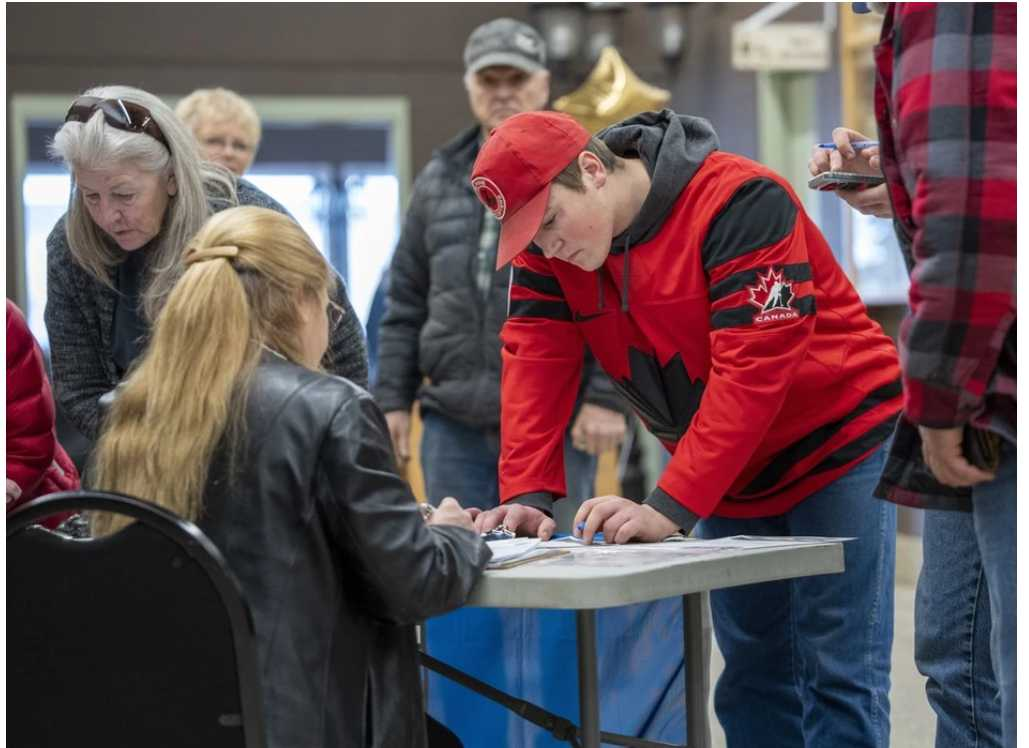
“I’m a veteran, I did my duty. I absolutely loved Canada, but I think Canada, especially the last 10 years, has changed. I think Alberta’s been abandoned in a lot of ways. I think the federal government has turned their back on us. I think a lot of the of money’s going just one way, and it’s a lost Liberal decade.”
https://edmontonsun.com/news/local-news/alberta-gun-show-gamrose-sparation
Maybe this is why Danielle keeps her cards close to her chest.
“Blacklock's Reporter
Minding Ottawa's Business
Monday, January 26, 2026
RCMP Feared Lougheed Run
The RCMP in a secret 1981 memo feared Alberta Premier Peter Lougheed could lead the West out of Confederation. Western separatism “lacks a dynamic leader” but might succeed with a charismatic organizer like Lougheed, wrote the Mounties counter-terrorism unit.
“An individual who is considered a potential leader is the premier of Alberta, Peter Lougheed,” said the memo. “He has voiced disagreement with the separatist position and declared himself ‘as a Canadian first’ on numerous occasions. It is thought however that by actions in the oil pricing negotiations, he harbours latent thoughts of independence.”
“There is one ingredient lacking to make Western separatism a viable force,” wrote the RCMP. “According to numerous editorials and studies, there lacks a ‘dynamic leader,’ a René Levesque of the West.”
“If ...