
We are committed to sharing news, stories, events and opinions that ensures our province stays free, united and independent from the overreach of the Federal government.
All are welcome and respectful debate is encouraged. Please join with the intention of participating. Proceeds are donated.

Vincent Byfield
LOYALTY TESTS AND LEADERSHIP: DOUG FORD, DANIELLE SMITH, AND A DANGEROUS QUESTION
Politics has a peculiar habit of elevating figures who, in any other walk of life, might never be mistaken for leaders at all. Sometimes this happens because the electorate sees something profound. Other times, it happens because the electorate sees something familiar. Doug Ford belongs squarely in the latter category.
It is genuinely difficult to identify which of his apparent qualities most captivated Ontario voters. Was it his devilish good looks? His svelte physique? His exceptional eloquence? Of course not. Ford’s appeal lies precisely in his ordinariness. He presents as an everyman—plainspoken, unpolished, instinctive. Alongside his late brother Rob Ford, he became part of a political brand defined less by vision than by familiarity, excess, and blunt populism. It resonated with voters weary of polished elites. Ultimately, it came down to trust. At that moment, Ontarians trusted the slick, expensive suit less, and trusted more the guy who could just as easily have been driving the local garbage truck.
But relatability is not leadership. Leaders, at least in theory, are meant to be aspirational—figures whose habits, discipline, and character invite imitation. They are role models. One is left to wonder how many Ontario students sincerely say to themselves, “I want to grow up to be like Doug Ford.”
By contrast, Danielle Smith represents almost the inverse political archetype. Even before accounting for gender, the contrast is stark. Smith did not emerge from a culture of spectacle or indulgence. She was never a party animal or tabloid figure. Her early years were marked by intellectual seriousness. At Mount Royal College, she studied political science alongside figures as ideologically diverse as Ezra Levant and Naheed Nenshi, sharpening her ideas through argument and analysis rather than by determining who could down the most beer or snort the most coke.
Her professional life followed the same pattern. Rather than cultivating a populist persona, Smith became a policy advocate, eventually leading the Alberta Enterprise Group, defending property rights, free enterprise, and constitutional limits on government power. Whatever one thinks of her positions, she is serious, disciplined, and motivated by ideas rather than applause. In temperament, background, and governing philosophy, she and Doug Ford could hardly be more opposite.
EMULATION: Which Example Would You Choose?
A more revealing measure of leadership, then, is whether it inspires emulation. In Alberta, women across generations are among Smith’s most consistent supporters. They see a leader who listens carefully, arrives prepared, takes notes, and responds thoughtfully. This is servant leadership in its classical sense—quiet, attentive, disciplined. Though she has no children of her own, Smith has adopted a distinctly maternal posture toward the province: protective, deliberate, and steady.
That instinct was especially visible during the COVID period. While working with Take Back Alberta (TBA), prior to my later service on the United Conservative Party of Alberta board, we observed a clear pattern: some of the fiercest resistance to vaccine mandates came from women—particularly mothers. TBA founder David John Parker coined the term mama bears to describe them.
Smith embodied this instinct in a quieter but no less consequential way. As a radio host on Corus Radio, she asked uncomfortable questions about mandates and dissenting medical views. When pressured to stop, she refused—and left the job with no obvious employment to go to. She chose principle over revenue, conscience over comfort. She was unwilling to allow monetary considerations to supersede what was, in a very real sense, a maternal instinct toward the people from all walks of life that she was speaking to every day on the radio. This, too, is the mama bear instinct—expressed not through theatrics or rage, but through resolve, and ultimately motivated by love.
LEADERSHIP CONSEQUENCES: Character Matters
Leadership must ultimately be judged not by image or rhetoric, but by outcomes. Nowhere is this clearer than in the handling of Canada’s most important economic relationship: trade with the United States.
Premier Ford chose an openly adversarial posture toward Canada’s largest customer. Framed as toughness, this approach relied on confrontation and rhetoric. The consequences have been severe. Ontario has experienced notable manufacturing strain. In the second quarter of 2025 alone, the province lost roughly 38,000 jobs, with about 29,400 of those in manufacturing—the sharpest quarterly decline outside the pandemic since 2009. These figures do not include downstream effects across supply chains and regional economies. While it may be convenient to blame the “Orange Man” south of the border, at some point Premier Ford must ask whether his approach has actually helped Ontario’s workers, or hindered them. That is a question he will eventually have to ask the man he sees in the mirror.
Alberta’s approach under Smith has been different. Rather than public antagonism, she pursued direct engagement, strategic patience, and professional diplomacy. The result has been greater stability in key sectors tied to U.S. trade—and measurable employment growth. Over the past year, Alberta added roughly 69,500 net new jobs, including nearly 28,700 jobs in a single month, one of the strongest monthly gains in the country.
The lesson is clear. One approach produced volatility and massive job losses. The other produced stronger economic relationships and substantial job growth. Personal character, it turns out, still matters.
LOYALTY TESTS: Dangerous Questions Backfire
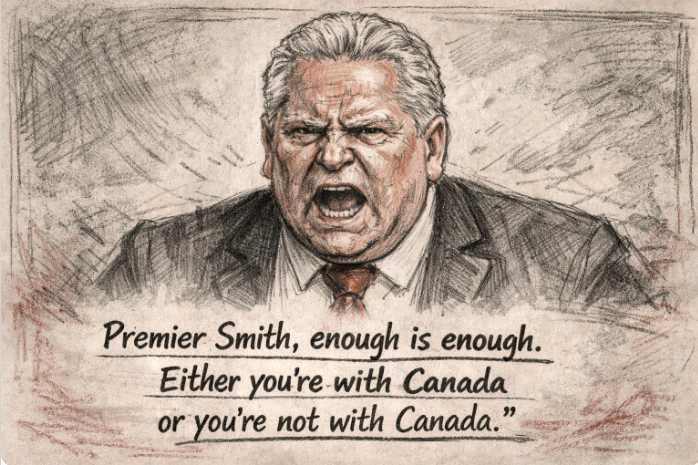
This brings us to the moment that has now pitted these two leaders against one another. Responding to Alberta’s separatist pressures, Ford declared that Smith should say, “Enough is enough. Either you’re with Canada or you’re not with Canada.” This framing is not merely unhelpful—it is dangerous. It turns a political pressure into a loyalty test.
History offers a warning. In the Roman Empire, suspected Christians were subjected to a simple loyalty test: offer a pinch of incense to the gods of the imperial cult. This episode is explored in A Pinch of Incense, from my father’s last great opus The Christians: Their First Two Thousand Years. As Pliny the Younger, governor of Bithynia, reported to Rome, the policy backfired. Christians embraced martyrdom willingly. For an empire dependent heavily on slave labor, the test became unsustainable and was abandoned. Ultimately, Christianity not only survived, but became the dominant religion throughout the entire empire.
The cause is different now—faith then, separatism now. But the parallel is striking: when confronting deep convictions, loyalty tests typically backfire. They do not extinguish belief; they intensify it.
Like Pliny, Danielle Smith governs a jurisdiction where conviction has reached a scale that cannot be shamed into silence. By her own estimate, roughly one in three Albertans now express support for independence. That is not a mandate—but it is a political reality. Her task is not to administer a loyalty test on behalf of Confederation, but to govern a divided province without inflaming it further.
CANADIAN RE-FEDERATION: Canada’s Only Hope Left
Albertans today fall, broadly speaking, into four camps. The largest still consists of those who do not know, do not care, or both—but that group is shrinking. A second favors outright independence. A third supports some form of U.S. statehood. Together, those two account for roughly a third of the population. The most consequential group, however, is the fourth: those who want to save Canada, but only if it can be fixed.
Increasingly, members of this last group are concluding that the political structure upon which Canada was built is not merely strained, but fatally flawed. For them, independence is not rejection but leverage. Independence becomes not an exit, but an instrument—a catalyst—to set in motion the only remaining way to force a renegotiation of Confederation into a genuine Canadian re-federation that every province could live with.
Ironically, the words meant to shut the conversation down may now define it. When Premier Ford said, “Enough is enough. Either you’re with Canada or you’re not with Canada,” many Albertans increasingly feel compelled to reply: we agree—enough is enough. We are no longer with the old, broken Canada that treats some provinces as subordinates and others as masters. But many of us are very much with a different Canada: a fair and just, re-federated Canada, where every province stands equal and every Canadian is treated with genuine political equality. If that Canada can be built, it will be defended. If it cannot, Albertans will no longer pretend that loyalty to a failing structure is the same thing as loyalty to a country worth saving.
And that new, re-federated Canada will only happen through a yes vote for Alberta independence.
—
A brief word, even though it’s an awkward one for me to say. Creating and sharing work like this takes time, and like most families, we have real obligations—food on the table, rent and mortgage, and the ordinary bills of life. I’m not independently wealthy, so if you would like to see more content like this in the year ahead, it requires the support of those who value it. If you’re able to help sponsor this work, every contribution truly helps. Email transfer works best at [email protected]. Thank you for your support. Always to the glory of God.

Use these discount codes to get 1/2 price subscription.
Monthly FREEALBERTA -$1
Annual GWDISCOUNT- $12
For the first time we had a location open in Bearspaw yesterday (and again today). I was amazed by the people that came. They were lined up at 1:30 so we opened early. We were to open at 2 pm. After the initial rush, it continued to be steady until closing.
What also intrigued me was we weren't getting that many local residents. But we got people from SE, SW, NE, NW Calgary. Many were recent immigrants. Some were second generation immigrants. I was happy for them to come. Several were from countries that had experienced Communism and were so eager to sign.
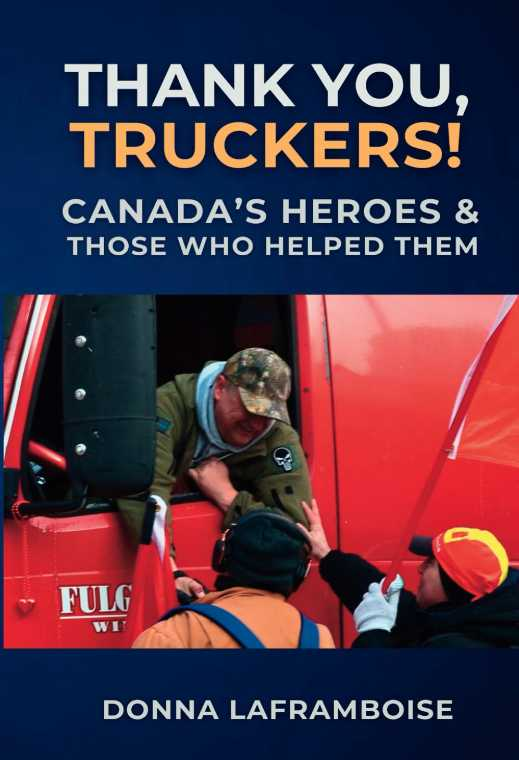
There was a lady there helping direct traffic. I didn't know who she was until she came over during a bit of a lull and introduced herself. She was the author of Thank You, Truckers! Canada's Heroes and Those Who Helped Them. Donna LaFramboise
She said the atmosphere around our petition paralleled the atmosphere during the Trucker's time in Ottawa. She was asking us what stood out to us as we talked/signed people. I mentioned the large ...
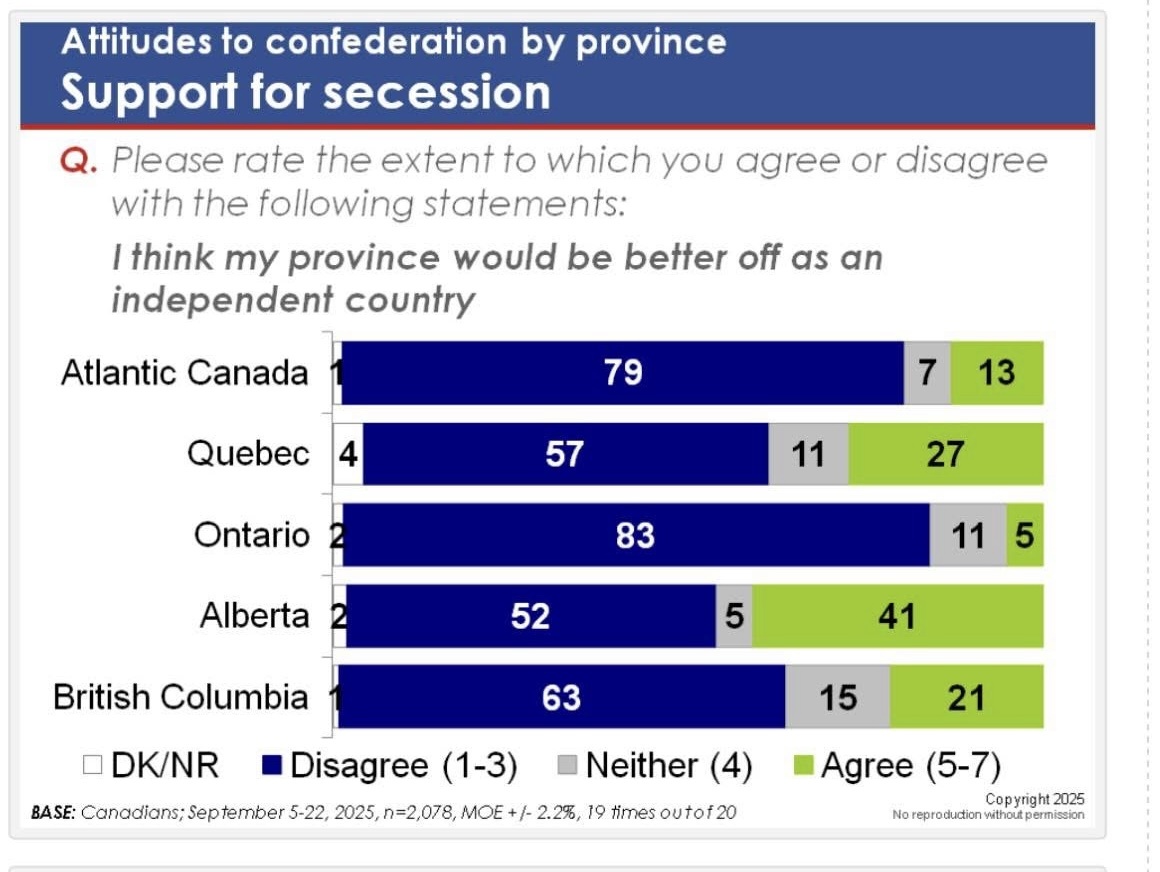
Rachel Parker: “IT’S HAPPENING! A new Ekos poll shows 41% of Albertans AGREE that their province would be better off as an independent country.
These are the highest numbers so far for Independence, and we’re just getting started.
Full poll in comments.”
https://www.ekospolitics.com/index.php/2026/01/dread-deepens-to-record-high-as-canadians-rally-to-a-more-churchillian-carney/