
We are committed to sharing news, stories, events and opinions that ensures our province stays free, united and independent from the overreach of the Federal government.
All are welcome and respectful debate is encouraged. Please join with the intention of participating. Proceeds are donated.

Here is what someone I know in another group did. See what you think?
You said:
How would edward bernays
make an ad on alberta independence
ChatGPT said:
Edward Bernays wouldn’t start by arguing for Alberta independence at all. He’d start by engineering the emotional and social conditions under which independence feels natural, inevitable, even moral—and only then would an “ad” appear.
Below is how a Bernays-style campaign would likely be constructed, based on his writings (Propaganda, Crystallizing Public Opinion) and historical practice. This is analysis, not advocacy.
1. Reframe the Issue (Change the Question)
Bernays believed people don’t respond to facts; they respond to symbols and identity.
So the campaign would avoid:
“Should Alberta separate from Canada?”
And replace it with:
“Who gets to decide Alberta’s future?”
“Is Alberta being treated fairly?”
“What does self-respect look like for a province?”
Independence becomes a by-product of a deeper moral frame: dignity, autonomy, maturity.
2. Create an Emotional Myth (Not a Policy Case)
Bernays used myths the way advertisers use brands.
The myth here might be:
“The Frontier Steward”
Alberta as the responsible provider—hard-working, resource-rich, practical—supporting others while being restrained by distant elites.
Key emotions activated:
Pride
Resentment (carefully controlled)
Moral superiority
Parental frustration (“we provide, others decide”)
3. Use Third-Party Authority (Never the Movement Itself)
Bernays hated direct persuasion. He preferred indirect credibility.
So instead of “Independence Party of Alberta” ads, you’d see:
Economists discussing “structural imbalance”
Historians revisiting “confederation as a living contract”
Indigenous leaders speaking about sovereignty (parallel, not identical)
Small-business owners discussing uncertainty and control
The illusion:
“Everyone is independently arriving at the same conclusion.”
4. The “Ad” Itself (Soft, Symbolic, Non-Explicit)
A Bernays-style ad would likely:
Visuals
Wheat fields, pumpjacks, family kitchens, winter roads
Hands at work, not politicians
Maps without borders emphasized (suggesting quiet separation)
Voiceover (calm, reflective, non-confrontational)
“For generations, Albertans have built, provided, and persevered.
We believe in fairness. In responsibility.
And in the idea that those who carry the weight should have a voice in how the future is shaped.”
No call to vote.
No “leave Canada.”
Just moral priming.
5. Normalize the Idea Before Naming It
Bernays believed the biggest barrier is taboo.
So first, the campaign would normalize phrases like:
“Economic self-determination”
“Provincial autonomy”
“Modern confederation models”
“Peaceful constitutional evolution”
Only later would the word independence appear—and by then it would feel like an obvious option, not a radical one.
6. Make Opposition Look Emotional, Not You
Bernays often framed opponents as:
Reactive
Fear-based
Out of touch
Not by attacking them—but by appearing calmer, more reasonable.
If critics sound angry, the movement sounds thoughtful.
If critics shout “danger,” the movement says “conversation.”
7. Ethical Footnote (Important)
Bernays himself warned—quietly—that these techniques:
Bypass rational debate
Manufacture consent
Can hollow out democracy while appearing to serve it
So the real Bernays-style success wouldn’t be winning a referendum—it would be making people believe they came up with the idea themselves.
If you want, I can:
Write a full mock Bernays-era ad script (1920s–30s tone)
Compare this to modern social-media manipulation
Or analyze how this approach differs from a grassroots democratic campaign
Just tell me which direction you want to go.
You said:
Write a full mock Bernays-era ad script (1920s–30s tone)
ChatGPT said:
Below is a fictional, historically styled advertisement written in the tone and rhetorical method of Edward Bernays in the late 1920s–1930s.
It is presented as analysis and pastiche, not endorsement or modern political instruction.
“A Question of Grown Nations”
A Public Address for Radio and Newsreel Circulation (c. 1931)
[Soft orchestral music. Strings. Measured, dignified.]
NARRATOR (calm, assured, paternal):
In every household, there comes a moment when the children are grown.
Not suddenly—
Not angrily—
But quietly, as responsibility accumulates.
[Sound: wind over open land.]
For decades, the people of Alberta have labored.
They have tilled fields where none stood before.
They have drawn wealth from the earth, not for themselves alone, but for the common good.
[Brief pause.]
They have given.
And given well.
[Music softens.]
Yet maturity brings with it a question—
Not of loyalty,
But of stewardship.
[Sound: pen scratching paper.]
Who is best equipped to decide how Alberta’s labor is used?
Who understands its land, its seasons, its risks, its promise?
[Measured beat.]
Those who live upon it—
Or those who watch from afar?
[Music rises slightly, hopeful.]
Across the modern world, peoples are discovering that cooperation does not require dependency.
That friendship does not require permission.
That dignity is not rebellion.
[Sound: footsteps, steady.]
Alberta asks no favors.
It seeks no quarrel.
It asks only whether a people who carry responsibility
May also carry authority.
[Music pauses—then resumes warmly.]
This is not a demand.
It is not a rupture.
It is a conversation worthy of adults.
[Quiet emphasis.]
A conversation about self-direction.
About fairness.
About the natural evolution of a capable people.
[Music swells—measured, restrained.]
History teaches us that strong partnerships are formed by equals—
Not by habit,
But by choice.
[Final pause.]
The future does not announce itself with noise.
It arrives when people are ready to speak plainly
About who they are.
[Music fades.]
NARRATOR (gentle, concluding):
Alberta.
A province that has learned to stand.
Now asking—calmly, thoughtfully—
What standing fully means.
[Silence.]
If you’d like, I can also:
Write a print version (newspaper or magazine layout, Bernays-style)
Create a counterpart “opposition” ad to show contrast
Translate this into modern minimalist political advertising
Analyze which specific Bernays techniques appear line-by-line
Just say the word.
You said:
Write a print version
ChatGPT said:
Below is a fictional Bernays-era print advertisement, styled as it might appear in a national magazine or provincial newspaper circa 1928–1934.
This is historical pastiche and analysis, not advocacy.
WHEN A PEOPLE COMES OF AGE
A Consideration for Thoughtful Readers
There is a moment in the life of every capable household when responsibility has outgrown supervision.
Not through conflict.
Not through impatience.
But through experience.
For more than a generation, Alberta has labored faithfully within Confederation.
Its farms have fed distant tables.
Its resources have strengthened industries beyond its borders.
Its people have borne risk, uncertainty, and effort with characteristic resolve.
These are not complaints.
They are facts.
Yet facts, when accumulated, invite reflection.
Is it unreasonable for those who carry responsibility to ask how decisions are made?
Is it improper for a province that provides so much to inquire whether its voice carries proportionate weight?
Across the modern world, capable peoples are re-examining old arrangements—not to abandon cooperation, but to improve it.
They have learned that partnership flourishes best among equals, freely choosing their course.
This discussion is not one of disloyalty.
It is one of maturity.
Self-direction is not separation from friendship.
It is the foundation of honest association.
Alberta does not seek disorder.
It seeks clarity.
The question before thoughtful citizens is not whether change is dramatic, but whether it is natural.
History reminds us that progress seldom arrives through noise or anger.
It arrives when responsible people quietly recognize who they have become.
Alberta has grown.
The conversation now is simply what that growth means.

Use these discount codes to get 1/2 price subscription.
Monthly FREEALBERTA -$1
Annual GWDISCOUNT- $12
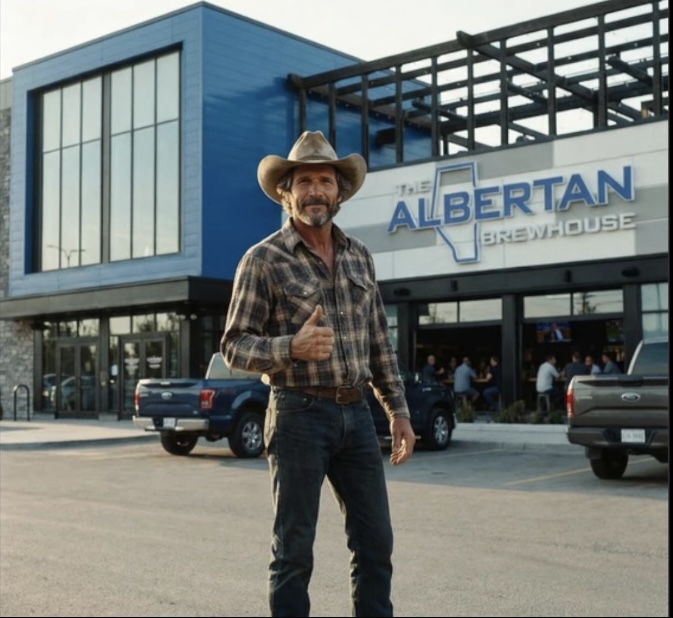
The “Canadian Brewhouse” in Spruce Grove cancelled an APP meeting yesterday. They said they don’t take political sides… meanwhile they have an
MLA Recall Petition Signature event against MLA Searle scheduled for this Friday.
Sounds like the just “Budweiser Lighted” themselves.
… and when we are Independent we will have our own Brewhouses.